What to think through before booking a trip to Niagara Falls, Canada
Timing and season
When you look at Niagara Falls trips Canada, the first thing to check is when you plan to go. The experience changes dramatically between summer, winter, and the shoulder months. Summer brings warm weather, full boat tours, and long daylight hours, but also heavy crowds and higher prices for accommodation. Winter offers a quieter, more dramatic view of the frozen mist and the Falls lit up at night, but some attractions close early or run on reduced schedules. Spring and fall give you milder crowds and moderate temperatures, though spring can be wet and the pathways icy in early fall. Decide what matters more to you: comfort and activity access, or solitude and lower costs.
Where you stay and how you get around
Your base location shapes the whole trip. Hotels on Fallsview Boulevard give you direct views of the Canadian Horseshoe Falls and easy walking access to Queen Victoria Park and the casino area. Properties closer to Clifton Hill put you near the entertainment strip, with its arcades, restaurants, and the midway. If you prefer a quieter setting, look at places in Niagara-on-the-Lake, about 20 minutes north. That town gives you a different pace, with wineries, historic inns, and a more relaxed feel, but you will need a car or a shuttle to reach the Falls each day.
Transport between the Falls and other points is worth planning ahead for. Parking near the main tourist zone can be expensive and hard to find during peak hours. Many visitors use shuttles or book tours that include pickup and drop-off. For a stress-free way to organize your itinerary, check the options at niagarafallsbus-tours.com. They offer bus packages that handle the logistics so you do not have to worry about driving or parking.
Which attractions you actually want to see
Niagara Falls trips Canada is not just about looking at the water. There is a long list of things to do, and not all of them suit every traveler. The Hornblower boat cruise takes you close to the base of the Falls, and it runs from late spring through early fall. Journey Behind the Falls lets you walk through tunnels to observation decks behind the curtain of water. The Butterfly Conservatory is a warm, indoor walk through a tropical garden filled with free-flying butterflies. If you are bringing children, check height and age restrictions on rides and attractions before you book. Some experiences, like the Niagara SkyWheel or the zipline, have minimum requirements.

Make a shortlist of what you really want to do, then confirm that those attractions will be open during your dates. Some close for maintenance or seasonal shutdowns. Others require timed entry tickets that sell out days in advance. Booking ahead saves disappointment.
Add-on experiences worth checking
Beyond the main attractions, there are smaller activities that round out a visit. The White Water Walk along the Niagara River gorge gives you a boardwalk view of the rapids. The Falls illumination at night is free and runs year-round. Seasonal fireworks happen in summer and on holidays. The Niagara Parks Commission runs a pass that bundles several attractions into one ticket, which can save money if you plan to do three or more paid experiences. Check what is included and whether the pass covers exactly what you want.
Budget and hidden costs
It is easy to underestimate how much a day at Niagara Falls costs. Entry fees for the main attractions add up, especially for a family. Parking, meals, and souvenirs push the total higher. Check whether your hotel charges a resort fee or a daily parking fee. Some hotels on Fallsview Boulevard include a parking pass in the room rate; others do not. Exchange rates matter for international visitors, since prices are in Canadian dollars and your home currency might shift the real cost.
One way to control the budget is to book a package that includes transport and admission to multiple attractions. A bus tour can bundle the core experiences so you pay once and know the total upfront. Many travelers find that a well-planned package from a provider like niagarafallsbus-tours.com removes the guesswork and leaves fewer decisions to make on the day.
Weather and what to pack
The microclimate around the Falls means you can get mist even on a sunny day. If you plan to go near the water, bring a rain jacket or a poncho. The boat tours supply them, but they are thin and single-use. In winter, temperatures can drop below freezing, and the pathways near the Falls get icy. Wear boots with good grip and dress in layers. Summer afternoons are hot and humid, especially in July and August, but evenings by the river can be cool. Check the forecast a few days before you leave and pack accordingly. A small backpack with water, sunscreen, and a change of socks makes the day more comfortable.
Time of day and crowd patterns
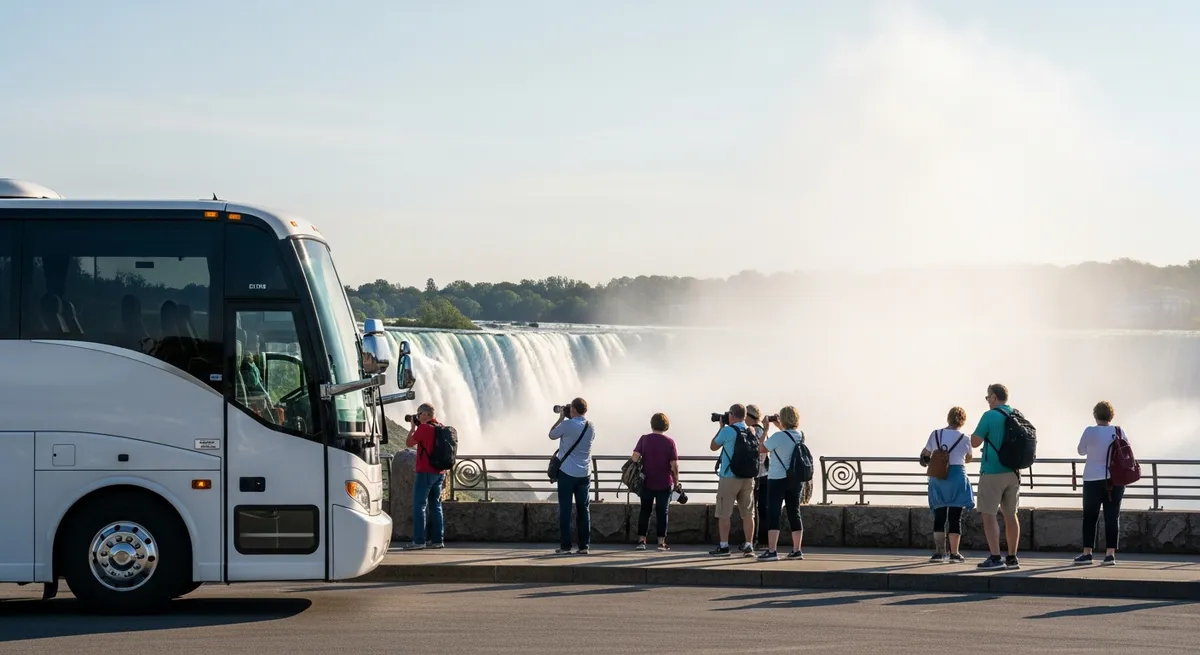
Niagara Falls sees its biggest crowds between 11 a.m. and 4 p.m., especially on weekends and in July and August. If you want a quieter experience, plan your visit for early morning or late afternoon. The Falls are lit after dark, and the nighttime view is just as impressive as the daytime one, with fewer people around. Some attractions, like the Hornblower, run later in summer, so you can book a twilight cruise and see the Falls from the water with the lights on. Check operating hours for each attraction you plan to see, because closing times vary by season.
Accessibility and mobility needs
Not all parts of Niagara Falls are easy to navigate for someone with limited mobility. The walkways along Queen Victoria Park are paved and fairly level, but the path to the Hornblower boarding area includes stairs, and the boat itself has steps. Journey Behind the Falls involves elevators and tunnels, but there is still some walking on uneven surfaces. The White Water Walk has a steep incline down to the boardwalk. If you use a wheelchair or have trouble walking long distances, call ahead to each attraction and ask about accessible routes and boarding procedures. Some hotels and restaurants are not fully accessible either, so check reviews or contact them directly.
Border crossing and documentation
If you are traveling from the United States, crossing into Canada means you need a valid passport, an enhanced driver's license, or a Nexus card. Check the requirements for your specific nationality before you book. The Rainbow Bridge and the Queenston-Lewiston Bridge are the main crossings near the Falls. Wait times can be long on summer weekends and holidays. If you are staying on the Canadian side, plan to cross early in the day or late in the evening to avoid the worst queues. If you are flying into Buffalo and driving up, factor in border wait times when you schedule your arrival.
Restaurants and food options
Eating near the Falls is expensive, and the quality varies widely. The restaurants on Clifton Hill cater to tourists and often serve average food at premium prices. A few blocks away from the main strip, you will find better value and more local options. Niagara-on-the-Lake has excellent farm-to-table restaurants and wineries, but they are a 20-minute drive away. If you are on a tight budget, consider booking a hotel room with a kitchenette or bringing snacks and sandwiches for the day. Many hotels have on-site restaurants, but the menus and prices are worth checking online before you arrive.

Safety and common pitfalls
Niagara Falls is a safe destination overall, but there are a few things to watch for. The railings along the Falls are there for a reason; stay behind them. The rocks near the water are slippery, and the current is extremely strong. Do not climb barriers or try to get a closer photo. The mist can make the walkways slick, so wear shoes with good traction. Pickpocketing is rare but happens in crowded areas, so keep your valuables close. Some ticket booths and street vendors sell counterfeit or overpriced passes; buy directly from the attraction's official website or a reputable tour operator. If a deal sounds too good to be true, it probably is.
With a little planning, a trip to the Canadian side of Niagara Falls can be smooth and memorable. Check each of these factors before you commit to a booking, and you will arrive prepared for whatever the weather, crowds, and attractions throw at you.